Listen to this lesson AI Podcast
0:00 Chain anatomy — the 3 links you need to know 5:00
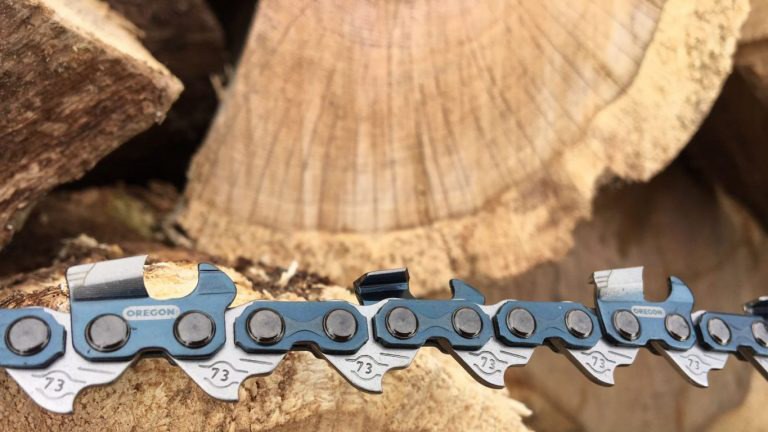
A chain is the repeated assembly of 3 types of links. Knowing these 3 components lets you diagnose 100% of chains at the counter, regardless of brand.
01
Drive links
The links that ride in the bar groove and engage the sprocket. At the counter, this is the only component you can count by eye to confirm the spec of a used chain.
- Their thickness = the gauge of the chain
- Their count = the functional length of the chain on a given bar
02
Cutters
Toothed links that do the cutting. Two main profiles, which we'll cover in detail in the Chisel vs Semi-Chisel lesson:
- Full chisel — sharp corner, fast cut, sensitive to abrasives
- Semi-chisel — rounded corner, holds its edge in dirty conditions
03
Tie straps
Links with no tooth and no drive tang that connect drive links to cutters. Their geometry determines whether the chain has a low-kickback profile — important for homeowner saws.
04
Counter protocol — identify a chain in 1 minute
With these 3 pieces of info, any chain can be identified in under a minute:
- Read the pitch + gauge stamped on the drive link tang
- Count the drive links on the used chain
- Cross-check against the Oregon spec table
Oregon Tip
On an Oregon chain, pitch and gauge are stamped on the drive link tang near the rivet. Ask the customer to lift the cover and read it together — it builds trust and trains the customer at the same time.