Listen to this lesson AI Podcast
0:00 Pitch & Gauge — the 2 numbers that drive everything 5:00
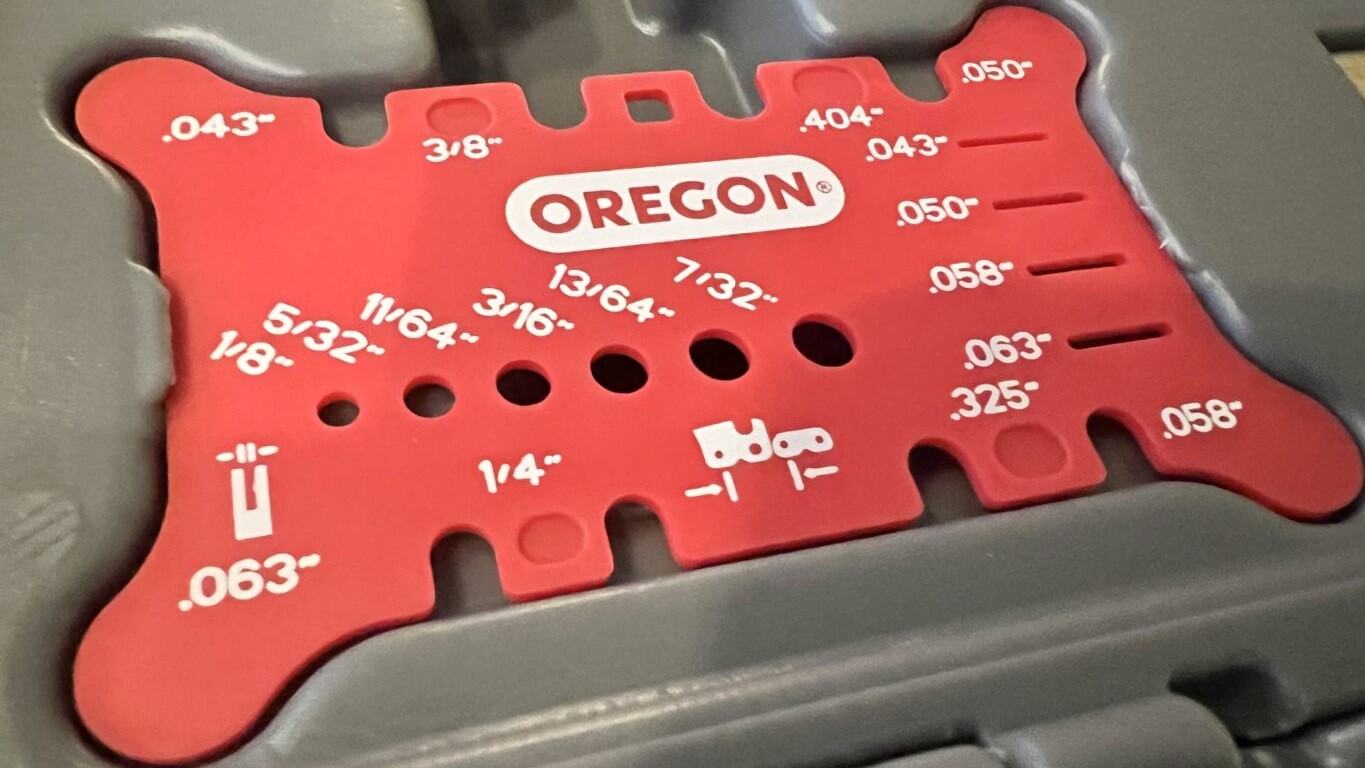
Pitch and gauge are the 2 specs that determine whether a chain will (or will not) fit a saw. Mastering these 2 numbers covers 80% of correct counter recommendations.
01
Pitch — the distance between rivets
Distance between 3 consecutive rivets, divided by 2. Measured in inches. The pitch must match the saw sprocket.
02
Gauge — drive link thickness
Thickness of the drive link that rides in the bar groove. Physical rule: a wider gauge will not fit, a narrower gauge has play — sloppy cut and premature bar wear.
- .043" — narrow-kerf
- .050" — most common pro gauge
- .058" — reinforced
- .063" — heavy-duty segment
03
Decoding an Oregon SKU — worked example
E72 = PowerCut family (E) in 72 drive links. Combined with the product sheet specs: 3/8" pitch, .050" gauge, 72 DL. That's the chain for a 20" bar on a Husqvarna 572XP in standard config. Once you've internalized this decoding, any Oregon SKU becomes readable in seconds.
Common pitches in the dealer channel
| Pitch | Segment |
|---|---|
| 3/8" LP | Homeowner, top-handle arborist (Stihl MS 170, MS 200) |
| 3/8" | Pro and semi-pro (Husqvarna 572XP, Stihl MS 261/362) |
| .325" | Pro durability (DuraCut, ControlCut) |
| .404" | Heavy-duty segment, large-timber felling (low volume in EU) |
Oregon Tip
On the Oregon bar, pitch and gauge are stamped near the user end. At the counter, have the customer lift the cover and read it with them — same method as for the chain.